
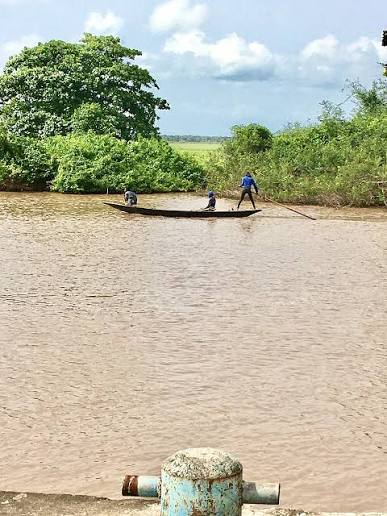
Across the Ilaje coastal communities, what used to be a distant threat has become a daily reality. Homes are swallowed overnight. Roads dissolve into water like sugar in tea. Livelihoods, built painstakingly over generations, are being erased in a matter of tides. The sea surge is no longer a prediction; it is a lived catastrophe.
For years, experts warned of rising sea levels, aggressive tidal patterns, and the fragile state of our shoreline. Environmental reports gathered dust. Community voices were dismissed as alarmist noise. Yet, beneath the surface of this negligence lay something far more troubling than indifference is a pattern of betrayal.
Funds were allocated. Budgets were announced with fanfare. Committees were formed. On paper, embankments were reinforced, shoreline protection projects executed, and coastal defenses strengthened but in reality, very little changed on the ground. The waves kept coming, unchallenged.
What happened to the money meant to hold back the ocean? That question echoes through the flooded streets of Ilaje today. It lingers in the silence of displaced families and in the eyes of fishermen who can no longer recognize their own coastline. The tragedy is not just environmental; it is deeply human, and painfully political.
Past leaders entrusted with the responsibility to safeguard these communities, chose convenience over courage. They ignored early warnings that could have mitigated today’s disaster. Worse still, credible allegations of embezzlement and diversion of funds meant for critical shoreline protection projects have cast a long shadow over their legacy.
This is not just about failed infrastructure. It is about failed leadership.
An effective embankment could have slowed the encroaching waters. Strategic shoreline protection could have preserved homes, schools, and economic activity. Instead, Ilaje stands exposed, its people left to battle the relentless force of nature with little more than resilience and hope.
And while nature may be unforgiving, it is not unpredictable. This crisis was foreseeable. It was preventable. That is what makes it particularly painful.
Today, entire communities are on the brink of displacement. Children grow up watching their environment disappear piece by piece. The cultural and economic fabric of Ilaje is under siege, not just from the ocean, but from years of neglect and mismanagement.
The question now is not whether the damage has been done? It has. The real question is whether anything meaningful will be done moving forward.
There must be accountability. Not the ceremonial kind, but real, transparent reckoning. Every naira allocated for coastal protection must be traced. Every abandoned project must be explained. The people of Ilaje deserve more than sympathy; they deserve justice.
At the same time, urgent action is needed. Shoreline protection can no longer remain a political talking point. It must become a priority backed by visible, measurable results. Modern engineering solutions, community involvement, and sustained funding must converge to reclaim what can still be saved because if nothing changes, the ocean will not stop. It will continue its quiet conquest, one wave at a time, until entire communities exist only in memory.
Ilaje is not just a coastline. It is a people, a history, a way of life. Allowing it to vanish under the weight of negligence would be a loss too great to ignore, and a failure too glaring to excuse.