
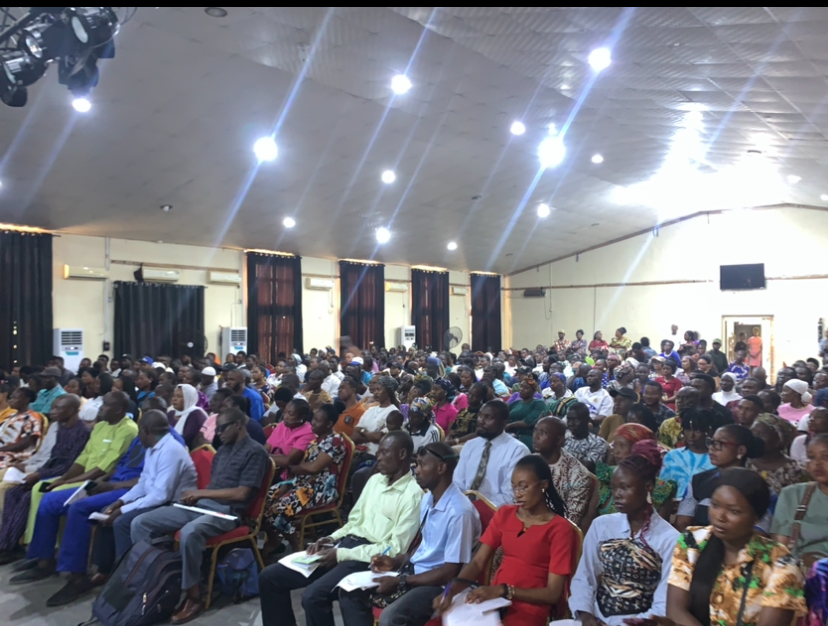
The International Fund for Agricultural Development (IFAD)-funded Livelihood Improvement Family Enterprises in the Niger Delta (LIFE-ND) Project has commenced a training technical sessions for 1,020 youths selected for its 2026 agricultural financed programme in Ondo State.
The beneficiaries, drawn from the state’s three senatorial districts, emerged from over 10,000 applicants and will undergo training in various agricultural value chains aimed at promoting self-employment, enterprise development and wealth creation.
Speaking during the orientation programme held on Wednesday, the State Project Coordinator of IFAD, Dr. Olawale Ademola, said the initiative was designed to equip young people with practical agricultural and agribusiness skills through the project’s incubation model.
“In this project, we have what we call the incubation model. We have incubators who are the trainers and incubates who are the trainees. What we are doing today is helping the new batch of incubates understand the project, its processes, the Memorandum of Understanding and the dos and don’ts before linking them with their trainers”.
Ademola explained that the duration of training would depend on the enterprise selected by participants, noting that marketing enterprises such as egg and fish marketing would last about a month, while production-based ventures including poultry, fish, cassava and cocoa production would require up to three months of training.
He added that beneficiaries would receive stipends during the training period and would subsequently be empowered with the equipment and resources needed to establish their businesses.
“After training, we provide empowerment based on the enterprise they have chosen. We give them what they need to start their businesses and continue to mentor them to ensure they succeed,” he said.
The coordinator disclosed that since the commencement of the programme in 2020, more than 6,000 youths had been trained and empowered across the state.
Also speaking, the Permanent Secretary of the Ondo State Ministry of Agriculture and Forestry, Mrs. Foluke Daramola, said the programme was aimed at tackling unemployment while encouraging youths to embrace agriculture as a viable means of livelihood.
She noted that the additional financing phase of the project was being implemented in 100 communities across 10 local government areas of the state.
“The purpose of this programme is to get our people employed, create jobs and encourage them in agriculture so that they can become self-sustaining. When they are able to do that, they improve the economy and can even become employers of labour themselves,” she said.
Daramola urged beneficiaries to remain committed to the programme and take full advantage of the opportunity provided.
“This is an investment in our youth. They should not take it lightly. We have the land, we have the resources and we have opportunities available for them to make a living for themselves,” she added.
Representing the National Project Coordinator of LIFE-ND, Mr. Yinka Amusan charged the selected youths to be worthy ambassadors of the programme by attending all training sessions and learning diligently from their incubators.
While speaking with some beneficiaries, Daily Trust gathered that the attendees expressed optimism that the agricultural training would transform their economic fortunes.
A beneficiary from Idanre Local Government Area, Adeyemo Judge, who enrolled for poultry production, said the training would help him acquire practical knowledge and skills needed to expand his business prospects.
“I will benefit a lot from this programme because it will help me grow in poultry farming. I will learn more about feeding, management and other aspects of the business. Through this programme, I expect to make money and improve my livelihood,” he said.
Another beneficiary, Omotola Kehinde from Akure North, said she discovered the programme through a poster in her community and was delighted to be selected.
“I applied and luckily I was selected. I will be trained in livestock production and at the end of the programme I expect to receive support to start my business. I have already started gaining knowledge that will help me succeed,” she said.
Another beneficiary, Tope Okeowo from Owo, said participants had been warned against misusing the support that would be provided after the training.
“We were told that we would be empowered, but we were also advised not to be like some beneficiaries who sold the equipment and resources given to them. I have always loved agriculture and my passion for it is very strong,” he said.
For some participants, the programme has already produced tangible success stories.
Mrs. Akinmoyeje Yemisi from Ile-Oluji/Okeigbo Local Government Area, who participated in the programme last year, said the training transformed her from an unemployed youth into an agribusiness entrepreneur.
“When IFAD came to our community, I registered and underwent training. Today, I have my own cassava plantation where I produce garri powder and semolina. I now train other incubates as well,” she said.
Similarly, Mr. Festus Ajayi, an incubate-turned-incubator involved in fishery, food production and pig farming, described his experience with the programme as life-changing.
“My experience with IFAD has been wonderful. Through the programme, I received mentorship and empowerment, and today I am training other incubates. Agriculture requires perseverance and hard work, but the rewards are worth it,” he said.
Ajayi advised young people to embrace opportunities in agriculture, stressing that success comes through dedication and consistency.