
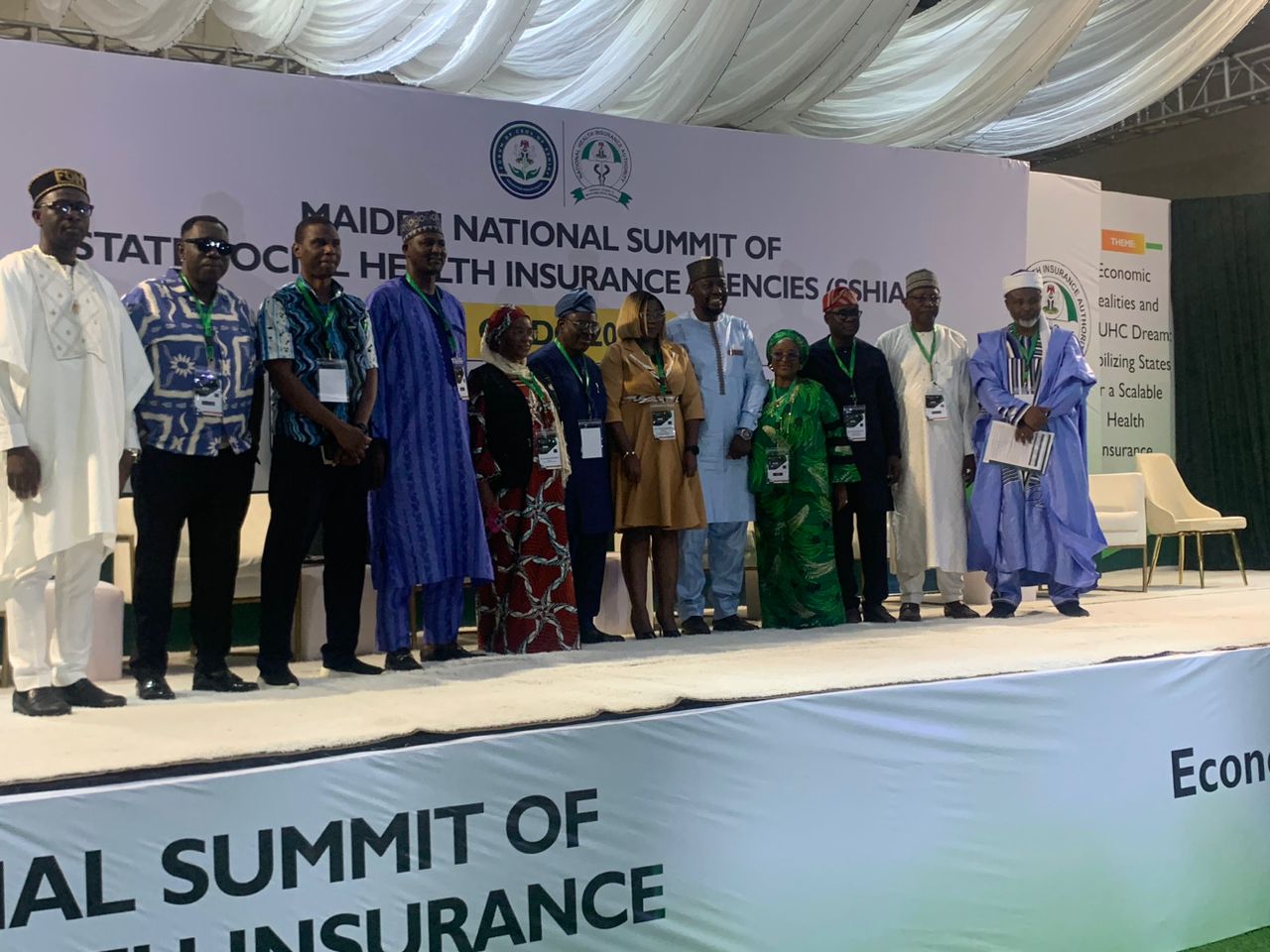
The Ondo State Government has reiterated the importance of health insurance as a critical tool for addressing rising healthcare costs, as it targets 500,000 enrollees under the Orange Health Insurance Scheme (ORANGHIS) by next year.
The Director-General of the Ondo State Contributory Health Commission (ODCHC), Mr. Abiodun Oyeneyin, stated this during the Maiden National Summit of State Social Health Insurance Agencies (SSHIAs) held in Akure.
The summit, themed “Economic Realities and the UHC Dream: Mobilizing States for Scalable Health Insurance,” brought together government officials, policymakers, healthcare providers and stakeholders from across the country to discuss strategies for expanding health insurance coverage and achieving Universal Health Coverage (UHC).
Speaking on the growing need for health insurance, Oyeneyin noted that the scheme had continued to attract residents across different segments of society, including public servants, informal sector workers, vulnerable groups and beneficiaries of the Basic Healthcare Provision Fund.
According to him, ORANGHIS currently has more than 300,000 enrollees, with plans underway to significantly increase the figure following the government’s decision to extend coverage to retirees.
“In total, we have over 300,000 enrollees under ORANGHIS. The pronouncement of His Excellency was that we want to extend it to all retirees, and there are about 34,000 retirees in the state, still counting,” he said.
Oyeneyin expressed optimism that the state would record a major increase in enrolment over the next year.
“We hope that by this time next year, we should be hitting roughly close to 500,000 enrollees, if not more,” he added.
Governor Lucky Aiyedatiwa had earlier announced the inclusion of retirees in the Orange Health Insurance Scheme at no cost during the opening of the summit, a move aimed at ensuring senior citizens have access to quality healthcare services without financial hardship.
The governor also unveiled a N1 billion Hospital Intervention Fund to support the expansion and modernization of healthcare facilities across the state as part of efforts to strengthen the health sector.
Highlighting the economic benefits of health insurance, Oyeneyin stressed that the scheme remains one of the most effective ways of protecting individuals and families from the financial burden associated with medical treatment.
“Healthcare is expensive, and health insurance is a good avenue to have certainty of budget and access to quality healthcare across the board,” he said.
He explained that sustained awareness campaigns and strategic partnerships had helped drive enrolment across the state.
The ODCHC boss further disclosed that efforts to improve healthcare delivery were yielding results, particularly in the area of drug availability.
Also speaking during the summit, the President of the Forum of Chief Executive Officers of State Health Insurance Agencies in Nigeria, Mohammed Safana, emphasized the need for stronger collaboration among state health insurance agencies to improve healthcare financing and expand insurance coverage nationwide.
“Some of the strategies that we are taking from states are really very important in expanding health insurance across the country because you find out that some strategies taken by some states can always be adopted by another state so that you can be able to upscale your enrollment, the processes, the verification in terms of clinical verification and other things,” he said.
He also raised concerns over the withdrawal of international donor organisations supporting programmes for diseases such as tuberculosis and HIV/AIDS, warning that sustainable funding mechanisms would be needed to bridge the gap.
Safana advocated the establishment of health trust funds across states as a means of ensuring sustainable healthcare financing.