
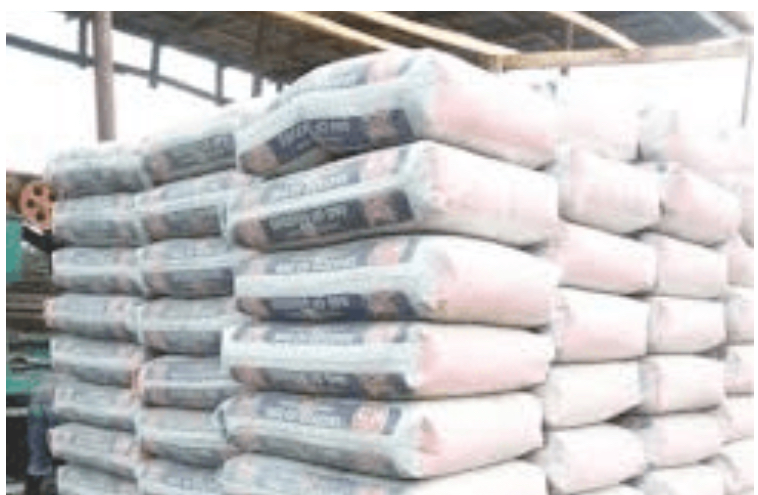
The Ondo State Commissioner for Commerce, Industry and Cooperative Services, Pastor Bola Ademuwagun, and stakeholders in cement distribution have blamed the surge in cement prices on rising fuel and transportation costs, citing global geopolitical tensions as a major factor.
Stakeholders attributed the recent increase in cement prices in Nigeria from about N11,000 and N11,500, depending on location, to around N12,000 per bag to rising energy and logistics costs.
Ademuwagun said that although factory production costs remain relatively stable, high petrol prices have significantly increased the cost of transporting cement.
“A bag of cement now sells for about N12,000, largely due to transportation costs driven by fuel prices,” he said.
He linked the rise in fuel costs to ongoing global conflicts, particularly in the Middle East, noting that the effects are impacting multiple sectors of Nigeria’s economy.
“It’s not just cement, everything is becoming more expensive,” he added.
The commissioner noted that fuel pricing is beyond the control of state governments, expressing hope that the administration of President Bola Tinubu will stabilise the situation.
He also highlighted infrastructure gaps as a key factor in price disparities, pointing out that states with rail access, such as Oyo, enjoy lower costs compared to those relying on road transport.
Ademuwagun called for accelerated investment in rail and seaport infrastructure to ease logistics and improve affordability.
He projected economic improvement within the next two years if global tensions ease and investments are sustained, while urging global leaders to prioritise peace.
“Nothing is better than peace,” he said.
A cement distributor in Akure Central Senatorial District of the state, Mr. Femi Ajibade, attributed the development largely to disruptions in global supply chains triggered by ongoing conflicts in the Middle East.
According to him, tensions involving Iran, Israel and the United States have affected key international trade routes, thereby slowing the movement of goods and increasing logistics costs worldwide.
He noted that although cement is produced locally, its distribution is heavily dependent on transportation networks, which have become more expensive to operate.
Ajibade further identified the sharp rise in the cost of diesel as a major driver of the price increase. He disclosed that diesel prices have surged from about N1,100 per litre to between N1,800 and N1,900 per litre in recent months.
Corroborating this position, another cement seller on Ondo Road, Akure, Mr. Laolu Taiwo, said the rising cost of petroleum products in Nigeria has a direct impact on all sectors of the economy.
“In Nigeria, fuel is the backbone of transportation. Once petrol or diesel prices go up, the cost of moving goods increases, and that reflects in the final price of commodities,” he stated.
In Ore, the headquarters of Odigbo Local Government area in the South Senatorial District of the state, a cement distributor, Mr. Enikanomehin, linked the surge in prices primarily to the recent increase in fuel costs, noting that the impact has been significant across the supply chain.
“Bad roads are seriously affecting distribution. It now takes more time, efforts and money to move cement from production plants to Ore and surrounding areas,” he noted.
In the Ondo North Senatorial District, cement distributors Jayeola Sunday and Mr. Alao Ijaniyi, who solely attributed the development to the hike in diesel and petrol prices, said diesel is now being sold for about N1,800 per litre, lamenting how the price surge has affected their business.
They expressed optimism that if the government works towards reducing the price of diesel and fuel, the price of cement will also come down.
“Diesel plays a key role in transporting cement from one place to another.
“As long as diesel prices continue to rise, cement prices will likely remain high,” they added.